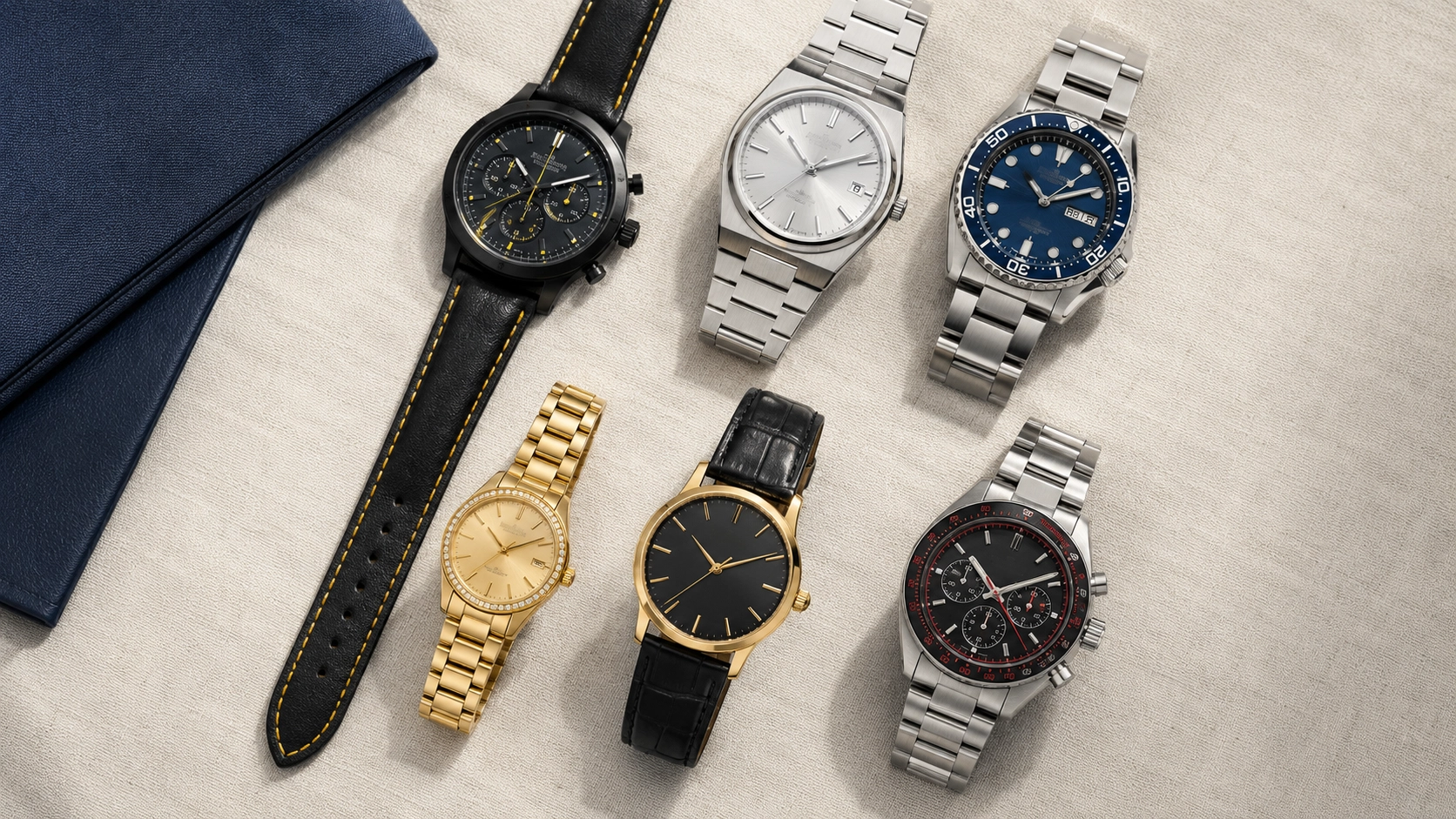
Retail customers shop “automatic” as a feature, the way they shop sapphire crystal or 200m water resistance. They walk in asking for one because a YouTube video told them quartz is boring. What they almost never know — and what most dealers buying automatic watches at wholesale haven’t fully priced in either — is that the movement inside determines your margin structure more than the brand on the dial does.
We carry automatics across five brands: Seiko, Tissot, Gucci, Emporio Armani, and TAG Heuer. Same complication, wildly different economics — the cheapest automatic in our catalog wholesales at $106 and the mainstream Swiss tiers run past $500. This is the margin map across all of them.
The Movement Tier Table
Realistic street price means what you can actually charge in 2026 — typically 20–40% under MSRP, because your customer sees comps online before they see your case.
| Tier | Movement | Example Ref | Wholesale | MSRP | Realistic Street | Margin Character |
|---|---|---|---|---|---|---|
| Fashion automatic | Asian skeleton auto | Armani AR60037 | $106 | $475–$550 | $280–$350 | Huge %, small dollars |
| Volume Japanese | Seiko 4R36 | SRPD55K1 | $180 | $280–$395 | $260–$300 | Thin. Traffic, not profit |
| Complication entry | Seiko 4R34 GMT | SSK001K1 | $229 | $370–$495 | $350–$450 | The value freak |
| Swiss entry | Tissot Powermatic 80 | T137.407.11.041.00 | $389 | $725–$950 | $650–$700 | The balanced play |
| Premium Japanese | Seiko 6R35 | SPB143J1 | $379 | $1,200–$1,300 | $950–$1,100 | The dollar-margin king |
| Fashion-Swiss hybrid | Sellita SW200 | Gucci Dive YA136353 | $555 | $1,550–$2,350 | $1,100–$1,500 | Logo premium on a real movement |
| Entry luxury | TAG Calibre 5 | WAY201A.BA0927 | registered dealers | $2,650–$2,750 | $1,800–$2,200 | 55–84% window, brand does the selling |
Two things jump out of that table if you stare at it the way a buyer should.
First: the 6R Seiko and the Powermatic 80 cost you almost exactly the same ($379 vs $389) — and the Seiko’s street price runs $300–$400 higher. Same capital, very different return. More on that below.
Second: percentage margin and dollar margin live at opposite ends. The $106 Armani more than triples your money but hands you ~$200 per sale. The Gucci Dive roughly doubles it and hands you $600–$900. Neither is “better” — they’re different businesses, and a healthy case runs both.
Tier by Tier: What Each One Is Actually For
Seiko 4R36 — the automatic your floor traffic asks for
The SRPD line at $180 wholesale is the default answer to “I want an automatic under $300.” Margins are honestly thin — call it 45–65% at realistic street — and we’ve said so before in the Seiko margin guide. You stock it anyway, because every 4R buyer is a 6R buyer in eighteen months, and because an automatic case with nothing under $300 in it sends walk-ins straight back to Amazon.
Stock 3–4 references, not ten. It’s a traffic tier, not a profit tier.
Seiko 4R34 GMT — the best value story in the case
The SSK001K1 at $229 is an automatic GMT with independent hour-hand adjustment, and there is still nothing else like it under $500 MSRP. This is the piece your customer has already researched before walking in — the sale is a stock-check, not a pitch. Sixteen colorways available; black and blue first, one loud dial third.
Tissot Powermatic 80 — the spec-per-dollar champion
$389 buys you a Swiss automatic with an 80-hour power reserve — double what the Calibre 5 TAG offers at five times the street price. That sentence is the entire sales pitch, and the PRX Powermatic delivers it in the integrated-bracelet case shape everyone wants right now. Street lands $650–$700, so you’re at roughly 70–80% markup with genuinely low sit-risk. The full economics are in the Tissot margin piece.
Seiko 6R35 — where the dollar margin concentrates
Here’s the number worth reading twice: the SPB143J1 wholesales at $379 — ten dollars less than the PRX Powermatic — and streets at $950–$1,100. That’s $570–$720 gross per unit, the strongest dollar margin below the luxury tier in our entire catalog. The 6R35 movement (70-hour reserve), sapphire, and a 200m Prospex case justify the retail. The catch is velocity: this buyer is rarer than the PRX buyer. Hold one or two units, not five, and let the margin per sale carry the tier.
Gucci Dive on Sellita SW200 — a real movement wearing a logo
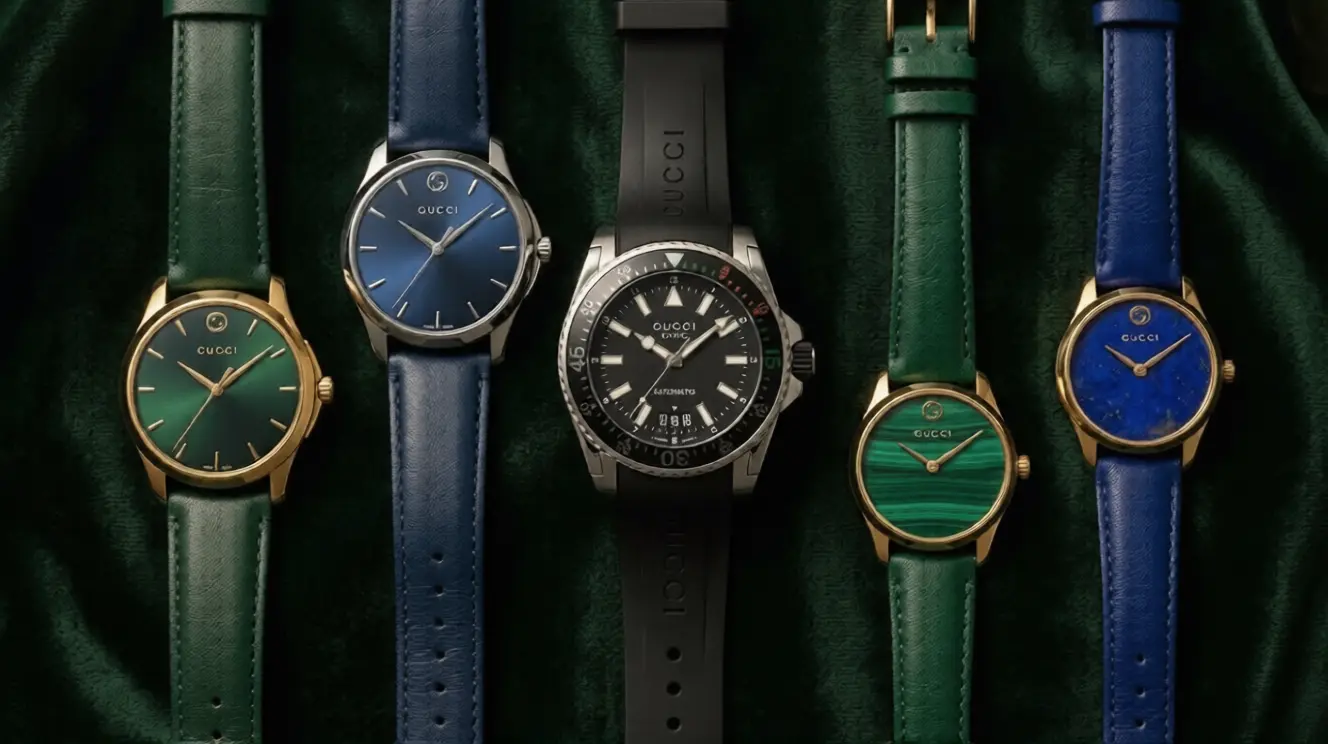
The skeptic’s read on fashion-brand automatics is usually correct — but the Gucci Dive automatic line is the exception worth knowing. Sellita SW200 is the same movement family running half the entry-Swiss industry, and Gucci’s brand gravity pushes street prices to $1,100–$1,500 against a $555 wholesale. You’re clearing $600+ per unit on a watch whose logo does the closing for you. We broke down the fashion-vs-horlogerie split in the two-Guccis piece; the Dive auto is the bridge between those two businesses.
Armani skeleton autos — the anomaly
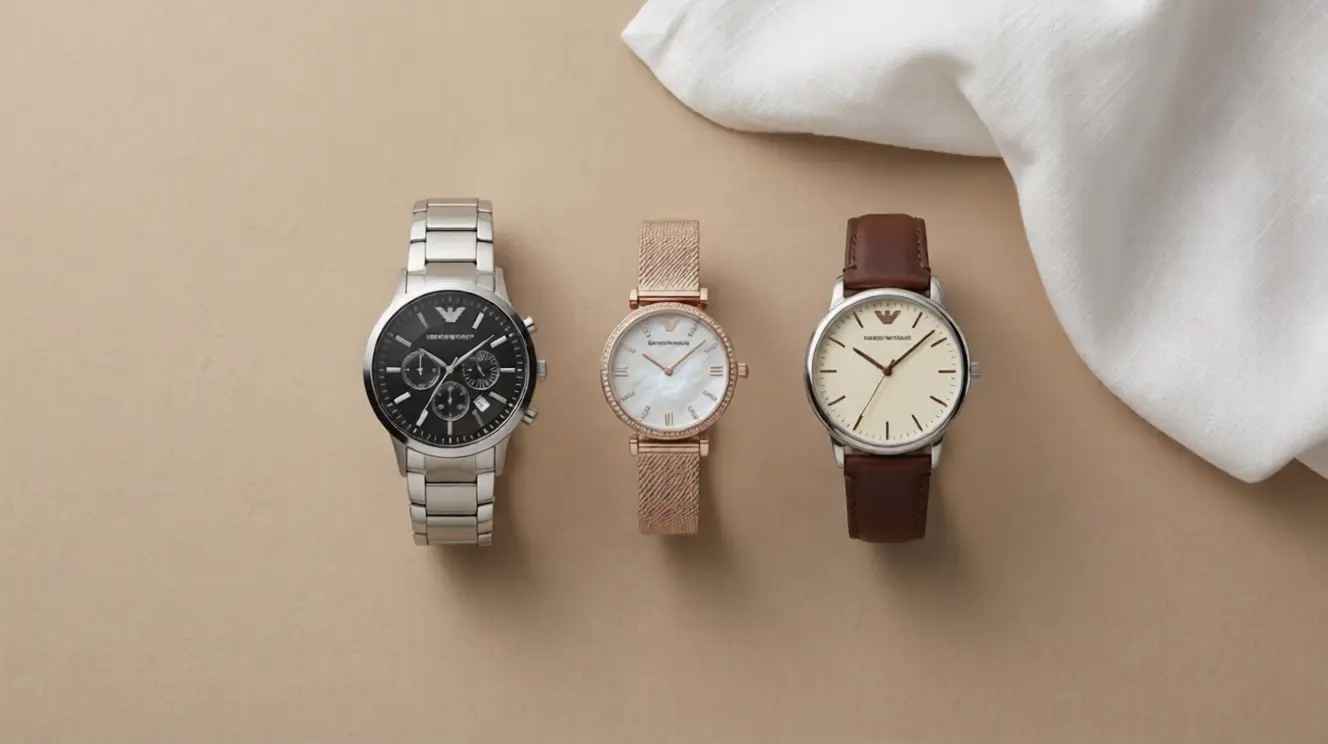
The AR60037 wholesales at $106. It’s an exhibition skeleton automatic that retails all day at $280–$350, because “you can see the movement” sells harder at this price point than any spec sheet. Movement pedigree? Modest Asian caliber, and we’re not going to dress that up. But at 160–210% markup and a two-figure buy-in, it’s the cheapest way to put the word “automatic” in your display — and for gifting customers, the open dial is the product.
TAG Calibre 5 — where the brand takes over
Above $500 wholesale, the movement stops being the story and the crown on the dial becomes it. The Aquaracer Calibre 5 buyer is comparing against Omega and Tudor, not against spec sheets. We keep TAG wholesale numbers behind registration, but the margin framework — 55–84% depending on tier — is laid out in the TAG Heuer margin analysis.
The Part Nobody Prices In: Service Liability
Quartz is fit-and-forget. Automatics come back.
A mechanical movement will eventually need regulation or a service, and your customer’s first instinct is to walk it back to whoever sold it. Three practical rules keep this from eating your margin:
- Have a watchmaker relationship before you sell your first automatic. A local bench that handles 4R/6R/Sellita work at $80–$150 turns a complaint into a service ticket.
- Frame the warranty honestly at the point of sale. Manufacturer warranty covers defects, not regulation drift. Thirty seconds of expectation-setting at purchase saves an argument two years later.
- JDM pieces need one extra sentence — the warranty story differs from international stock, and we covered exactly how to frame it in the JDM explainer.
Factor a service-hassle discount into thin tiers. It’s why the 4R line’s 50% markup is weaker than it looks — and why the 6R and Sellita tiers, where the same liability sits under 3x the gross, are structurally better automatic business.
A First Automatic Order, by Budget
~$1,000: SRPD55K1 ×1, SSK001K1 ×2 (black + blue), AR60037 ×2, PRX Powermatic ×1. Six units, four price points, ~$1,020 in. Covers $300 through $700 retail.
~$3,000: add SPB143J1 ×1, Gucci Dive YA136353 ×1, a second PRX dial color, and two more SSK colorways. Now the case runs $300–$1,500 retail with the dollar margin concentrated in the top three units.
Either way: order singles first, watch what your traffic actually asks for, and reorder the winners. The how-to-buy guide covers the vetting and intake side if this is your first wholesale order anywhere.
FAQ
Are automatics worth stocking over quartz? Different jobs. Quartz fashion pays the rent on volume (Hugo Boss math here); automatics carry higher tickets, higher engagement, and the customer who comes back. Most healthy independents run roughly 60/40 quartz-to-auto by units and the reverse by profit.
Which tier should a new dealer start with? Powermatic 80 and the SSK GMT. Both sell on specs the customer already believes in, both sit under $400 wholesale, and neither needs you to defend the brand.
Do customers actually care about power reserve? The number itself, no. The sentence “you can take it off Friday night and it’s still running Monday morning” — yes. That’s the 80-hour pitch, and it’s why the Powermatic converts against watches costing three times more.
What about Miyota-based fashion automatics? Fine machines, weak story. If the movement has no name recognition and the brand adds no gravity, you’re selling a skeleton dial on looks alone — which works at $106 wholesale (see the Armani) and gets progressively harder above $200.
Every reference in this piece is in live stock — register for dealer pricing to see the numbers behind the TAG tier and everything else. Orders earn points at $1 = 1 point, 10 points = $1 off the next buy.