Search “how to buy watches wholesale” and you’ll get two kinds of results: affiliate listicles written by people who have never invoiced a retailer, and marketplace listings where the product photo is a render and the “factory direct” price is somehow higher than street. Neither tells you the thing you actually need to know, which is how this business works when real money moves.
We ship watches to retailers every week — TAG Heuer, Tissot, Seiko, Gucci, Emporio Armani, and Hugo Boss, about 1,700 references in live stock. We also spent years on the buying side before running this platform. This guide is what we’d tell a friend opening their first watch counter: where the inventory actually comes from, how to vet whoever you’re buying from, and the four specific ways new buyers lose money.
Where Wholesale Watches Actually Come From
There are five real channels. Everything you’ll ever be offered traces back to one of them.
| Channel | Typical Discount off MSRP | MOQ Reality | Risk Level | Who It’s For |
|---|---|---|---|---|
| Authorized distribution (AD) | 30–50% | High — territory contracts, annual commitments | Low | Established multi-door retailers |
| Regional licensed distributors | 40–55% | Tiered — “buy 50 for the good price” | Low–Medium | Mid-size retailers in the distributor’s territory |
| Grey market brokers | 50–70% | Deal-by-deal, availability is a coin flip | Medium–High | Experienced buyers with cash ready |
| B2B marketplaces (Alibaba, DHgate) | Meaningless — listings are unverifiable | ”1 piece” that becomes 50 after you message | High | Honestly? Nobody, for branded watches |
| Direct wholesale platforms | 50–70% | Low or none | Low–Medium | Independent retailers, online sellers, first-timers |
A few honest notes on that table:
Authorized distribution is the gold standard and mostly out of reach. Brands like TAG Heuer run AD networks with territory protection, minimum annual buys, and display requirements. If you’re reading a how-to guide, you don’t qualify yet — and that’s fine. Most successful independents never go AD; the margin difference doesn’t justify the commitments.
Grey market is where most of the world’s discounted Swiss watches actually circulate: authentic pieces that leaked out of official distribution — overstock from ADs quietly clearing inventory, regional arbitrage, cancelled orders. The watches are real. The problem is the supply chain behaves like weather. Your broker has 30 units of a reference this month, zero next month, and a price that moved 8% between the quote and the invoice. Since LVMH started squeezing unauthorized distribution in 2024, grey supply on TAG Heuer has tightened and prices have crept up. If your grey source went quiet last year, that’s why.
B2B marketplaces deserve the bluntness: do not buy branded watches on Alibaba or DHgate. Authentic branded inventory almost never sells through open marketplace listings — brands’ legal teams hunt those listings, so what survives is overwhelmingly replica or bait. The “Seiko” at 80% off with 4.9 stars is not a Seiko. Marketplaces are fine for unbranded straps, tools, and display gear. Not for anything with a logo you don’t own.
Direct wholesale platforms — which is what we are, so weigh this paragraph accordingly — sit between grey brokers and distributors: published stock lists, fixed pricing, no territory games, low or no MOQ. The trade-off is you’re trusting the platform’s own sourcing discipline, which is exactly why the vetting section below matters. Apply it to us too.
The Six-Point Supplier Check (Run It Before Money Moves)
Every burned buyer we’ve met skipped at least two of these.
1. Reference numbers must be real and specific. Ask for a stock list and spot-check five references against the brand’s own catalog. A real supplier lists CAZ101E.BA0842, not “TAG Formula 1 chronograph assorted.” If the reference doesn’t exist, or the photo shows a different bezel than the ref number implies, walk. (Our stock lists every ref individually — browse the shop and check us against this rule.)
2. Per-reference photos on request. Not renders, not brand press shots — a photo of the actual unit, ideally with today’s date on paper in frame. Anyone with real inventory can produce this in ten minutes. Anyone who can’t doesn’t have the watch.
3. Boxes and papers, stated explicitly. “Comes with packaging” is not an answer. You want: original box, warranty card (blank or stamped?), manuals, hang tags. A watch without its warranty card is worth 15–25% less at retail, and some brands’ customers simply won’t buy without it. Get the completeness in writing on the invoice.
4. A sample order they don’t flinch at. Order one to three units before you order thirty. A supplier who requires volume before showing you product quality has told you everything. This is the single cheapest insurance in the business — $200–$400 to see the actual condition, packaging, speed, and communication.
5. Consistent pricing behavior. Get a quote, wait a week, ask again. Grey brokers reprice with their supply; that’s normal for them but you should know which type you’re dealing with. A platform with published prices that quietly differ per customer is running a game.
6. A returns and dispute path that exists in writing. What happens if a watch arrives with a scratched crystal? Dead movement? Wrong reference? If the answer is vague reassurance instead of a stated policy, the real answer is “you eat it.”
The MOQ Conversation, Decoded
MOQ (minimum order quantity) is where new buyers get squeezed most often, because the pressure feels like a rite of passage. It isn’t.
The classic structure: “1–9 units at price A, 10–49 at price B, 50+ at price C” — with price A set 20% too high specifically so you’ll stretch to tier B. Now you own 10 units of an untested reference, and your capital is parked in inventory you can’t move. The tier discount cost you more than it saved.
What the tiered game protects is the distributor’s economics, not yours. Your economics as an independent are about turn rate — how fast a unit becomes cash again. Five references × 2 units each beats one reference × 10 units at a slightly better price, every time, because you’re testing five demand curves instead of one. We wrote about the capital-turn math in the Hugo Boss ROI playbook; the logic applies to every brand.
So when you evaluate a supplier, the question isn’t “what’s the MOQ” — it’s “does the per-unit price punish small orders.” Flat pricing regardless of quantity (which is how we run) means you can buy like a scientist: small, varied, and guided by what actually sells.
Paying Without Getting Burned
Wholesale watch deals move on bank transfer and, increasingly, crypto (usually USDT). Cards and PayPal are rare above small amounts — processor fees eat thin wholesale margins, and chargeback exposure makes sellers refuse them. So the payment method itself is not the red flag; context is.
Normal: bank transfer to a business account matching the supplier’s name, invoice first, order ID as reference. Normal: USDT to a published wallet address with the amount and TX hash logged against your order.
Red flags, in ascending order of certainty:
- The account name doesn’t match the business you’ve been talking to
- The account changes between invoice and payment (“use this other account this week”)
- Pressure to send before the invoice exists
- A discount for skipping the invoice entirely
That last one isn’t a discount. It’s the price of making your money unrecoverable.
Whatever the method, the discipline is the same: pay against an invoice that lists references, quantities, unit prices, and completeness (box/papers). Screenshot everything. A supplier with a real payment-proof workflow — where you submit the transfer receipt and get confirmation tied to your order — is showing you operational maturity, not bureaucracy.
Authenticity: Verify at Intake, Not After a Customer Complains
Every watch that enters your inventory should pass an intake check the day it arrives, because your dispute window with any supplier is measured in days, and your reputation with customers is measured in years.
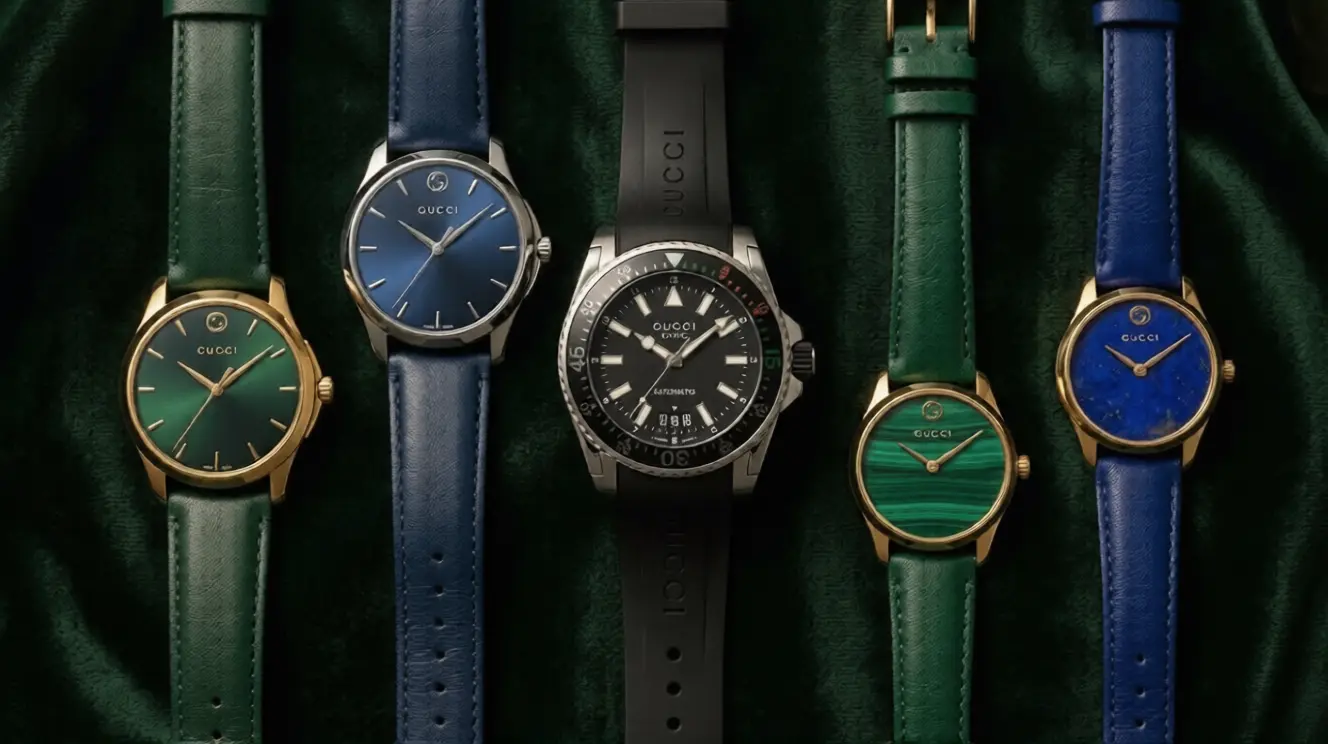
The intake basics for any brand: reference number on the caseback matches the invoice, serial present and not ground off, movement behavior matches spec (a quartz that ticks when the ref says automatic is a five-second catch), crystal and clasp markings correct, warranty card matching the reference. For logo-heavy fashion brands the counterfeiters are better, and the checks get more specific — we published a full Gucci authenticity walkthrough that shows the intake mindset in detail.
One structural tip: buy from sources that verify at their intake, and the problem mostly disappears before it reaches you. Ask any supplier what their inbound QC actually checks. A real answer takes two minutes. A fake one takes two sentences.
What Margin Should You Expect?
Rough 2026 reality, by tier — assuming you’re pricing at realistic street (30–50% under MSRP), not sticker:
| Tier | Example | Wholesale Range | Realistic Markup |
|---|---|---|---|
| Fashion quartz | Hugo Boss, Armani, Gucci quartz | $67–$253 | 100–200%+ |
| Entry Swiss / JDM auto | Tissot PRX, Seiko 5 Sports | $130–$230 | 70–170% |
| Mid Swiss auto | Tissot Powermatic, Seiko SPB | $270–$400 | 60–100% |
| Entry luxury | TAG Formula 1, Aquaracer | varies | 55–84% |
The counterintuitive part for new buyers: percentage margin falls as price rises, while dollar-per-unit margin rises. Fashion quartz pays the rent; entry luxury builds the reputation. Most healthy independent inventories run both. The per-brand math lives in our margin guides — Tissot, TAG Heuer, Seiko — and the under-$500 starter list is the fastest way to pick a first order.
The Four Classic Burns
The bait list. A broker sends a stock list with one reference priced 30% under everyone else. You wire for it; it’s “just sold,” but they have something similar. The bait ref never existed. Defense: sample order first, always.
The completeness downgrade. Quoted “with box and papers,” arrived with a generic box and no warranty card. Each unit is now worth 20% less and you agreed to nothing in writing. Defense: completeness on the invoice, per reference.
The tier stretch. Covered above — you bought 10 to reach tier B pricing, on a reference you’d never tested. Defense: judge suppliers by their 1-unit price.
The replica sandwich. Twenty units arrive; eighteen are authentic, two are convincing fakes. Spot-checking three units missed them. This one is nearly exclusive to marketplace and unvetted-broker sourcing. Defense: 100% intake checks on new suppliers, not samples.
FAQ
Can individuals buy watches wholesale, or do I need a company? Depends on the seller. ADs and distributors require business credentials. Most direct platforms, including ours, require registration but not a storefront — plenty of our buyers are online sellers and one-person operations. What actually gates wholesale pricing is registering, not incorporating.
What’s a typical minimum order? At distributors: 10–50 units with tier games. At direct platforms: often none. Ours is one unit, same price as a hundred. Anyone telling you a large MOQ is “industry standard” is describing their standard.
Are wholesale watches authentic? From the first four channels in the table — yes, that’s the point of the channels existing. From open B2B marketplaces — assume no for branded product. The word “wholesale” says nothing about authenticity; the sourcing channel says everything.
Can you buy luxury watches wholesale without being an AD? Yes — that’s precisely what grey market and direct platforms exist for. You won’t get Rolex allocation this way (nobody legitimately wholesales Rolex; treat any offer as fraud), but entry-luxury like TAG Heuer is widely available outside AD networks at real discounts.
Where to Start
If this is your first wholesale order, the low-risk path looks like: register, pull the stock lists, pick three to five references across two price tiers, order one unit of each, and run the intake checks when the box lands. Total exposure: a few hundred dollars for a complete picture of a supplier’s real behavior.
Run that exact test on us. Register for dealer pricing, start with the under-$500 list, and judge the operation by what shows up. Every order earns loyalty points ($1 = 1 point, 10 points = $1 off) — which matters more than it sounds once you’re reordering monthly.